
BTS [ARIRANG] : Not a Comeback Album — A Distress Signal
It introduces Korea in an unexpected way.
![BTS [ARIRANG] : Not a Comeback Album — A Distress Signal](/content/images/size/w1200/2026/03/IMG_0572.png)
I was already exhausted by [ARIRANG] before I even listened to it. Months before the album's release, questions poured in about the album's economic impact, its contribution to the stature of Korean culture, and the meaning of the Gwanghwamun performance. Before the music had even come out, I was pressed to predict what it would sound like, to prophesy which elements would be incorporated. It was as if I were being told to produce meaning before hearing a single note.
The commotion surrounding the Gwanghwamun performance wore me down further. Before the music had dropped, before the members could deliver any message of their own, BTS's comeback was instantly recast as a historic moment in K-content exports and a national event to promote Korean culture. The excessive security measures and the government's tone-deaf handling of popular culture only made everyone more miserable. Ironically, after finishing all fourteen tracks of [ARIRANG], the strongest emotion it conveys is precisely that fatigue.
[ARIRANG] contains music that is the exact opposite of everything people expect from BTS, and everything they have been told to expect from BTS. Everyone said they were looking forward to BTS's new album.
That expectation, however, was never singular. Fans wanted the narrative ambition of The Most Beautiful Moment in Life series and WINGS; the music industry wanted another global smash on the scale of "Dynamite"; and the nation wanted an icon of national prestige. Each of these interests was different. This, despite the fact that through their solo work, the members had already shown the music they personally aspire to make, even if imperfectly. The most accurate reading is that people have fixed in advance the version of BTS they want, and are trying to force BTS into that frame. Even HYBE and the BTS members themselves, in their Apple Music commentary, keep repeating messages like "let's run together" and "let's become one."
But the album tells a different story: ennui, fatigue, depression, confusion, and solitude. The entire album moves through a heavy darkness, as though crossing a difficult mountain pass. HYBE justified the comeback show at Gwanghwamun by invoking the idea that during the 1865 reconstruction of Gyeongbok Palace, regional forms of "Arirang" came together and gave rise to the melody familiar to us today. Perhaps they wanted to deliver a grand message of reunion and harmony through "Arirang."
But the "Arirang" of the Gyeongbok Palace reconstruction era was Gyeongbokgung Taryeong. It was shaped by the resentment and suffering of common people conscripted into corvée labor and crushed by economic hardship as they were mobilized to rebuild the dynastic capital. That anguish entered "Arirang" and became the representative melody we know today. The "Arirang" heard on [ARIRANG] is an Arirang of pain. BTS are confronting a situation in which their comeback has become a massive event beyond even their own control: express trains bypassing stations, forced use of annual leave, endless calculations of "economic impact," politicians talking and talking. In a Korean society where essence has disappeared and only spectacle remains noisy and overstated, [ARIRANG] sounds less like a glittering marquee than a kind of distress signal.
In the title track "SWIM," BTS confess that they are "trying to look like good kids in this terrible world."
"Bad world. Gone away and I still wake up in this mad world. Name a place that I could breathe on this map, world"
In their twenties, BTS ran ("Run"). Because all they could do was love you, they ran even if it meant being called fools. In their thirties, BTS swim. Running is direction. Swimming is rhythm. This song is not about cresting a wave. It is about wanting to sink beneath the water.
BTS do not answer the world's demand that they rise to the surface; they wish to descend deeper. The least melodically prominent of any BTS title track, this song quietly refuses every expectation. Sing of hope. Represent Korea. Become the heroes of K-pop. To all of this, BTS answer: they simply want to stay safe, together with their fans.
The overall sound matches the title. Instead of melodic force or triumphant catharsis, a coarse, densely packed texture dominates the album. Given the involvement of globally recognized pop hitmakers and innovative musicians, some expected the ’smooth’ pop of "Dynamite" or "Butter." [ARIRANG] deliberately drains that energy. The attitude felt on hip-hop anthems like "Body to Body" or "Hooligan," tracks oriented toward party and celebration, is not the overwhelming emotion of a grand return but the sense of duty in carrying out an assigned task.
The work that BTS and BigHit Music have delivered is closer to staring into confusion than offering clear-cut answers. Contrary to the narrative that all seven worked together during a residency in LA, this is a rap album in which the sensibilities of RM, SUGA, and j-hope dominate. It is a déjà vu of RM's Indigo and Right Place, Wrong Person, SUGA's Agust D trilogy, and j-hope's Jack in the Box. The chamber-music quality of V's Layover, the mainstream pop sensibility of Jungkook's Golden and Jimin's MUSE, and the pop craftsmanship of Jin's Echo have not been fully integrated into the group sound. There are certainly moments where the vocal line shines with delicacy—"SWIM," "Please," "Merry Go Round"—but the album's overall center of gravity tilts toward the rap line.

[ARIRANG] is deeply disorienting. There is no narrative threading through the album. There is no unifying story of the kind found in the youth trilogy of the Most Beautiful Moment in Life series, the Demian of WINGS, or the Jungian psychology of MAP OF THE SOUL: PERSONA. The concept that is supposed to perform that role is "Arirang" and Korean identity. But its density is not rigorous.
The album's Korean identity is attempted in two directions, yet reaches depth in neither. The Arirang melody sampling in "Body to Body" emphasizes its function as the opening number of the BTS comeback show—designed to lead a collective singalong alongside the song "겨레의 마음." "Aliens" is more overt. Lines like "박수쳐 흔들어 중모리", "From the 가나 to the 하", "예의를 차려", "뭐든 더 빠르게", "김구 선생님 how you feel."—a flood of "Korean" signifiers.
But this is not observation of what is Korean; it is enumeration. Any reflection on the habits of Korean life or the friction of cultural difference abroad is shallow, stopping at the recitation of Korean markers. Critically, the message of "Aliens" and the heavy sound that Mike WiLL Made-It builds on 808 bass do not align at all. Using slang like eongtteu does not make a song Korean music.
When the order and the silent pressure for a Korean group to use Korean expressions in their music fails to find expression in BTS's own autonomous language, [ARIRANG] loses its edge—in stark contrast to the abrasive, knife-clashing energy of "Hooligan." For a work focused on rap, a lack of lyrical sharpness is a fatal weakness.
Instead, [ARIRANG] fills this void with the density of its sound production. The aggressive touch of Flume and JPEGMAFIA is vivid on "FYA"; Kevin Parker of Tame Impala gives birth to the psychedelic alternative of "Merry Go Round"; Diplo and Artemas deliver the darkwave trip-hop of "Like Animals"; Ryan Tedder forges the alternative pop of "NORMAL"—all of which grant their creators more creative license than expected. As a work whose purpose is let's at least make good sounds, since we haven't sorted out what we want to say, it succeeds. The downside—that a track like "FYA," where the producer's color outweighs BTS's own, is never fully internalized as the group's—is a cost to be borne by the album's drifting spirit.

The most interesting aspect of [ARIRANG] lies in this very dissonance. The album's paradoxical thematic consciousness emerges from the contrast between its highly polished sound and its absent narrative; from the fatigue layered beneath its dazzling return; and from the gap between its parade of Korean symbols and the pain that actually seeps through from having to perform a role within Korean society.
This is why the interlude "No. 29," composed solely of the striking of The Sacred Bell of Great King Seongdeok, with its long beat frequency phenomenon and its 1 minute and 38 seconds of lingering resonance, is the most important track on the album. The more intimate name of The Sacred Bell of Great King Seongdeok is the Emille Bell. Everyone knows the legend: no matter how many times the bell was cast, it would not produce a proper sound, until a child was thrown into the molten metal and only then did it yield a clear tone. The story says that whenever the bell is struck, one can hear the sorrowful cry of a child calling for its mother. For a beautiful sound, someone must be sacrificed. BTS have long played precisely that role.
After their immense success in the United States, and through the pandemic, BTS came to bear the burden of being national heroes who were expected to bring joy to the world and sing of hope and self-love. Although this is billed as a return after three years and nine months, that figure is calculated from the anthology album Proof; if one sets aside the event singles "Dynamite," "Butter," and "Permission to Dance" along with Be, the last album through which BTS actually conveyed a message was MAP OF THE SOUL: 7, all the way back in 2020.
Like the The Sacred Bell of Great King Seongdeok, which is managed as National Treasure No. 29, BTS too are managed like a national asset within the frame of promoting national prestige. And this functions like a piece of black comedy, especially when combined with the performance at Gwanghwamun and the farcical spectacle of those watching it.
This is why the album's second half, which unfolds within the lingering resonance of the The Sacred Bell of Great King Seongdeok, is persuasive. After "SWIM," the darkest title track in BTS's catalog, comes the heart-rending psychedelia of "Merry Go Round" and "Normal," where they confront their present head-on. "Normal" in particular converts even the album's greatest weakness—its message—into a bristling expression, restoring to BTS the vitality they had lost. It is one of the best tracks on the album.
"Kerosene, dopamine, chemical-induced Fantasy and fame, yeah, the things we choose Show me hate, show me love, make me bulletproof Yeah, we call this sxxt normal"
"Normal" is the shadow of the direction this entire album should have taken. The vocal power emerges; the message presses close to BTS as they are now; the screaming serves a narrative function. The excellence in production and the emotional sincerity that had been scattered across the album converge, if only in this one song. On "they don't know 'bout us," too, BTS betray their weariness with the gaze that calls them heroes:
"걔넨 특별해 Asian 중에, 영웅스러운 존재, too hard to break. We can't relate. 그냥 사람 일곱인데."
This sentiment is not entirely new for BTS. "IDOL" was conscious of outside eyes: "손가락질해 / 나는 전혀 신경 쓰지 않네 / 나를 욕하는 너의 그 이유가 뭐든 간에” On "ON," as they leapt into the global market, they showed a powerful will to accept pain and transcend it. In [ARIRANG], there is no such declaration of overcoming. "대체 뭐가 달랐냐고 자꾸 물어 / 나는 대답해, 나도 몰라.".
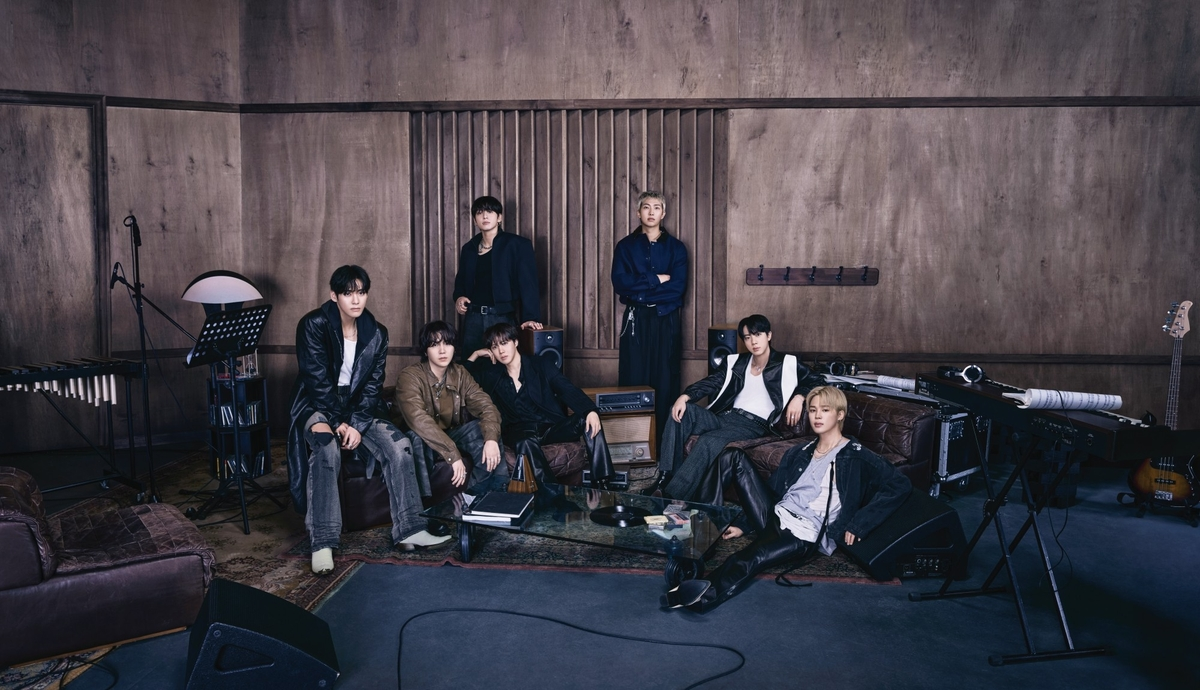
[ARIRANG] introduces Korea in an unexpected way. The Korea it reveals is not the display-model Korea armed with cultural prowess. It is the Korea of a fatigue society that is hastening its own extinction through the voluntary self-exhaustion demanded by colossal achievement.
A society that celebrated young men declaring "밤새 일했지, everyday" (from "Dope") as admirable youth; a bizarre era of criticism in which meaning must be produced before a note is heard and the economic ripple effects of music are discussed more than the music itself—a country where everyone simply works without purpose is captured in BTS's album from a wholly different angle.
Just as regional Arirang songs, which once contained the grievances and hardships of countless subjects and industries, were consolidated into the soundtrack of the film Arirang and came to function as a folk song that was not really a folk song, the discourse surrounding BTS ultimately devolves into a process of elimination and exclusion in which each party projects its own hunger for power—rather than the honest story of seven young men or the future of an industry. A group assigned the role of heroes crying out "What the hell do you want from me?"—that is BTS's Arirang.
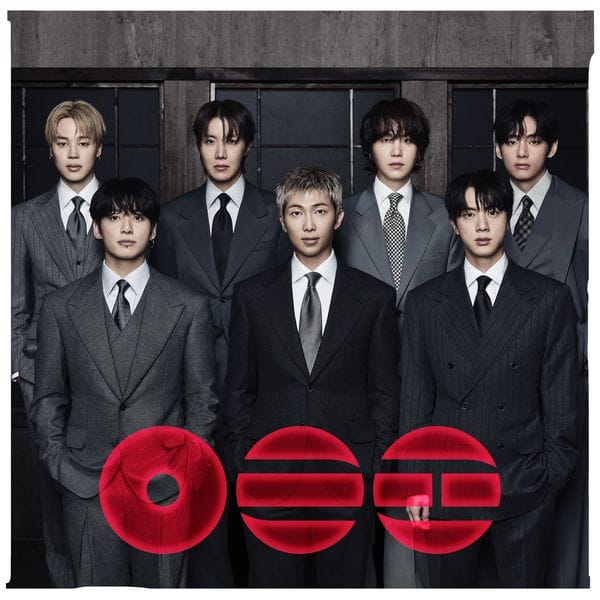
Whether intentionally or not, [ARIRANG] arrives at a different kind of truth. It reveals Korea as a society pathologically obsessed with achievement, shaped by a modern history of hyper-accelerated economic growth and uniform competitive logic; a country in which faith in fairness has collapsed and everyone is becoming unhappy.
[ARIRANG] condenses within itself a nation that ignores the stories of those living at the center of a noisy global event, a nation in which even the protagonists of that stage cannot overcome the limits imposed on them as bleached, sanitized idols, and a nation in which the public square at the heart of the capital is controlled according to the selective preferences of power, with public sentiment manipulated at will. And [ARIRANG] is also a Korean song in another sense: despite all this suffering, it is not a song of resistance against the system, but one of silently enduring one's allotted pain and crossing the pass regardless.
Despite endless fatigue, controversy, and towering expectations, BTS still make a fourteen-track album and perform the role of idols on a Gwanghwamun stage whose true authorship or intent remains unclear. In the final track, "Into the Sun," where they walk silently toward a sun that may one day rise, one is left with a faint hope that BTS's wandering may still conclude in hope. If asked why [ARIRANG] is a work that contains Korean sentiment, I would answer that it is because it offers the sorrowful portrait of BTS leaping into molten metal to forge a massive bell, and of all those watching them, each serving not essence but spectacle. It is a portrait of South Korea, where under the immense command to cross the pass, even the one who coldly abandons a beloved and leaves cannot make it ten ri before falling ill. Arirang was always that kind of song.
![방탄소년단(BTS) [ARIRANG] (2026)](/content/images/size/w720/2026/03/download.jpeg)
![[K-POP IN THE US] TITAN CONTENT](/content/images/size/w720/2025/12/at-1.jpg)
Comments ()